Alphonse Mucha

About Mucha
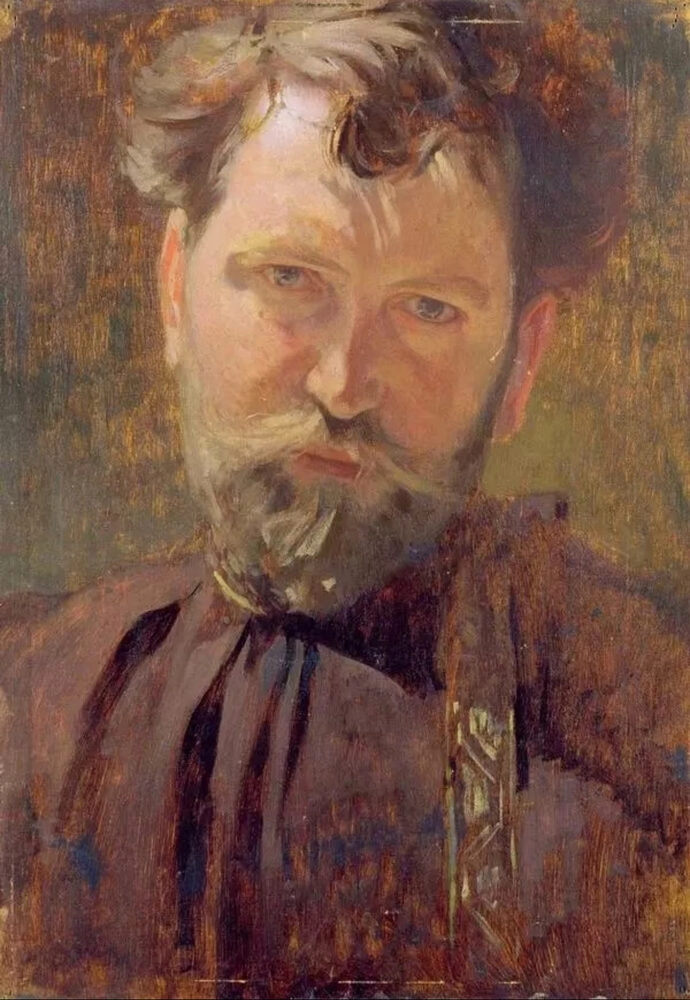
Alphonse Mucha
Czech, 1860 - 1939
FollowAlphonse Mucha was a Czech painter, illustrator, and graphic artist. In Paris, he became a leading Art Nouveau artist, famous for his decorative theatrical posters, especially for Sarah Bernhardt.
At 43, he returned to Bohemia and devoted himself to The Slav Epic — twenty monumental canvases on Slavic history, painted between 1912 and 1926. Presented to Czechoslovakia in 1928, it was his most important work and is now on display in Prague.
Style Code
Curve
S-curves and spirals that make the composition flow.
Keywords: S-curve / Spiral / Flow

Nature
Vines, flowers, and laurel form organic frames.
Keywords: Vines / Flowers / Laurel
Feminine
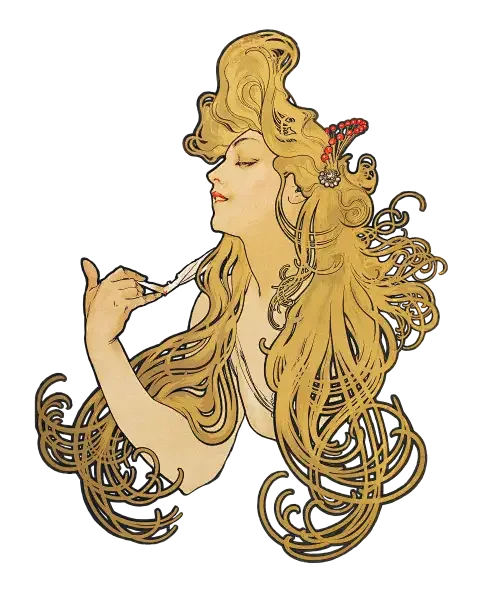
Idealized profiles: elegant, mysterious, symbolic.
Keywords: Profile / Grace / Symbol
Ornament
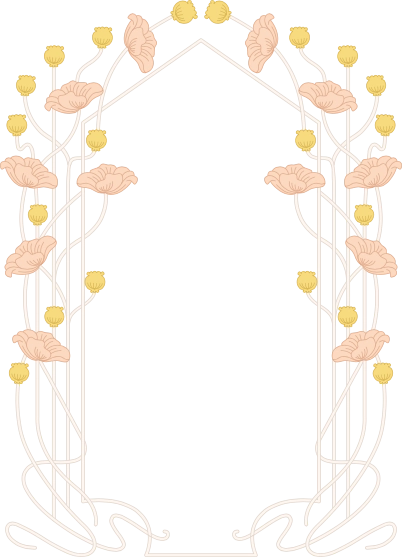
Arches, mosaics, and geometric borders.
Keywords: Arch / Mosaic / Border
Masterpieces
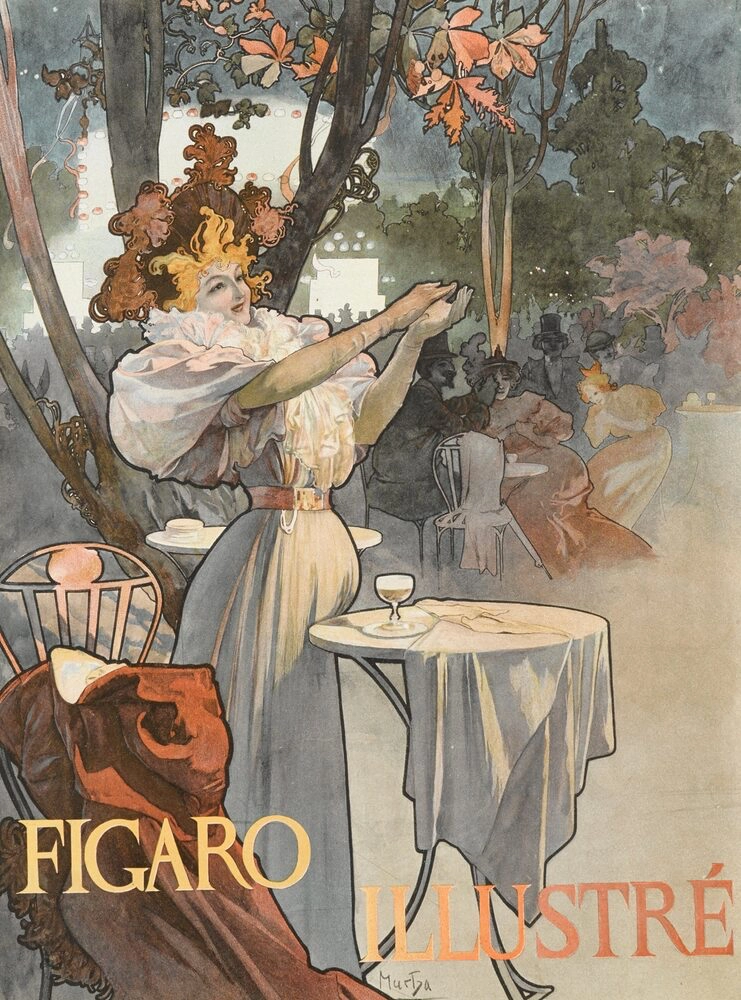
Figaro Illustré, 1899
Alphonse Mucha created this lithograph poster for the French magazine Figaro Illustré. It depicts an elegant Parisian lady relaxing at an outdoor café under autumn trees. The soft colour palette, flowing curved lines and natural foliage are classic features of Mucha's Art Nouveau style. This work captures the leisurely atmosphere of the Belle Époque in Paris.
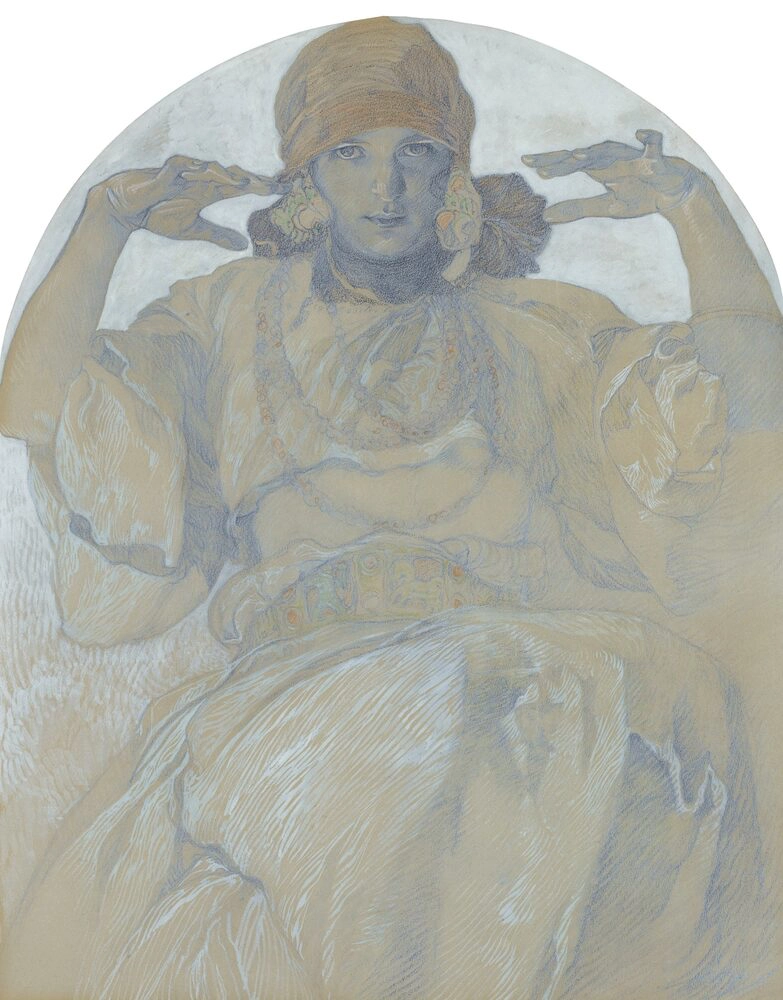
Le Fou (The Fool), 1897
This circular illustration was made as the title page for the Christmas issue of Figaro Illustré. It shows the allegorical figure "The Fool" with hands raised beside his head. Mucha uses muted earth tones and subtle contour lines to build a quiet, symbolic mood. The circular frame is a common decorative format in his art.
The Seasons, 1896
Spring
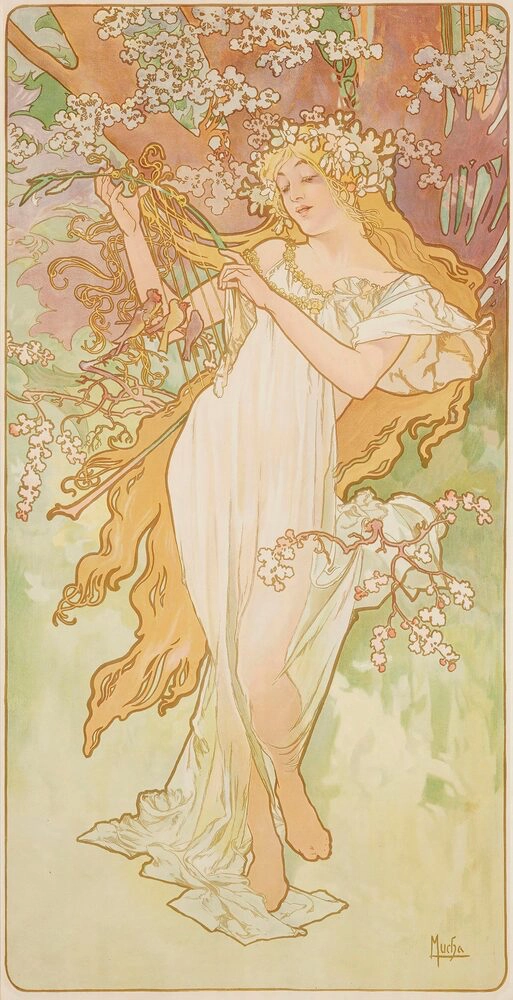
Spring depicts a young maiden with blonde hair and a flower crown. She holds a lyre made of blooming branches, surrounded by blossoms. The soft pastel colours express rebirth, innocence and hope.
Summer
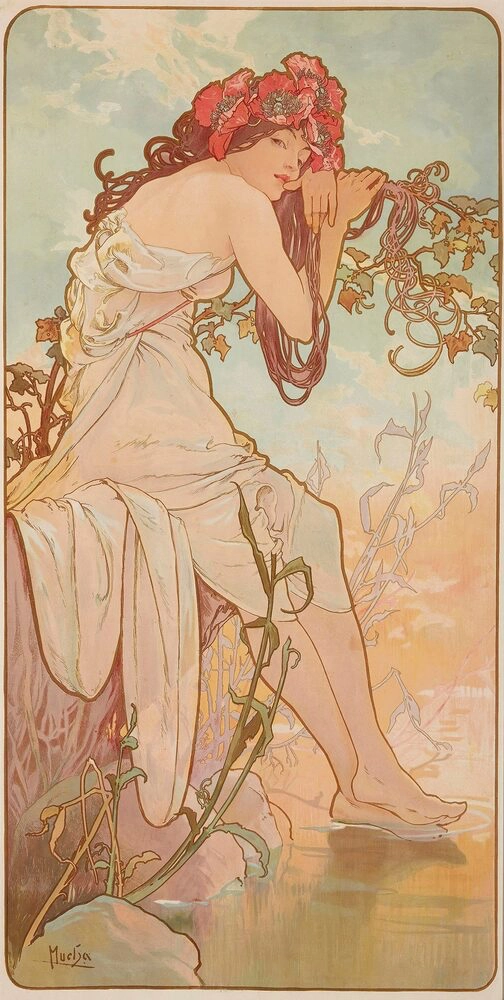
Summer shows a woman resting by the stream, with red poppies in her hair. Warm green and red tones dominate the panel. It symbolizes fullness, warmth and the peak of life.
Autumn
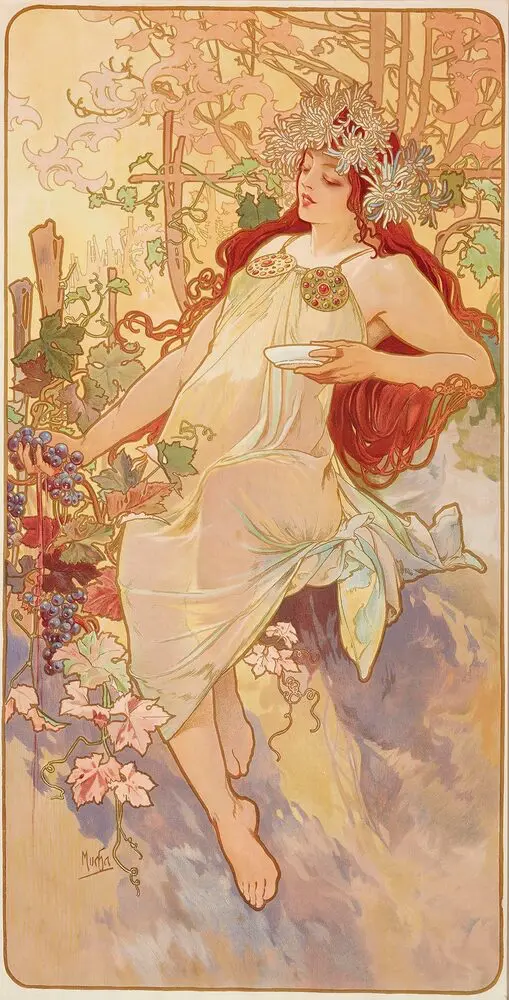
Autumn features a goddess crowned with chrysanthemums, holding ripe grapes among vines. Golden and orange colours represent harvest, maturity and joy.
Winter
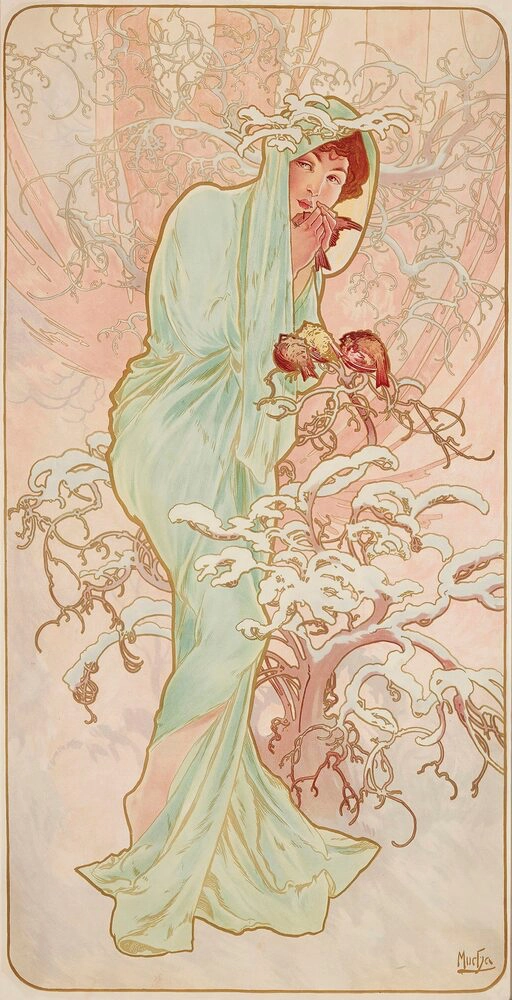
Winter portrays a woman wrapped in a green cloak, sheltering a freezing little bird in snow. Cold silver and blue tones stand for silence and protection. Beneath the coldness lies the quiet hope of coming spring.
Spring
Spring depicts a young maiden with blonde hair and a flower crown. She holds a lyre made of blooming branches, surrounded by blossoms. The soft pastel colours express rebirth, innocence and hope.
Summer
Summer shows a woman resting by the stream, with red poppies in her hair. Warm green and red tones dominate the panel. It symbolizes fullness, warmth and the peak of life.
Autumn
Autumn features a goddess crowned with chrysanthemums, holding ripe grapes among vines. Golden and orange colours represent harvest, maturity and joy.
Winter
Winter portrays a woman wrapped in a green cloak, sheltering a freezing little bird in snow. Cold silver and blue tones stand for silence and protection. Beneath the coldness lies the quiet hope of coming spring.
The Seasons is Mucha's iconic set of four decorative panels. He personifies spring, summer, autumn and winter as four graceful women. Each figure matches unique plants, colours and atmosphere to represent the cycle of nature. Soft curved lines and botanical decorations fully show the classic Art Nouveau style.
L'Illustration, 1896-1897
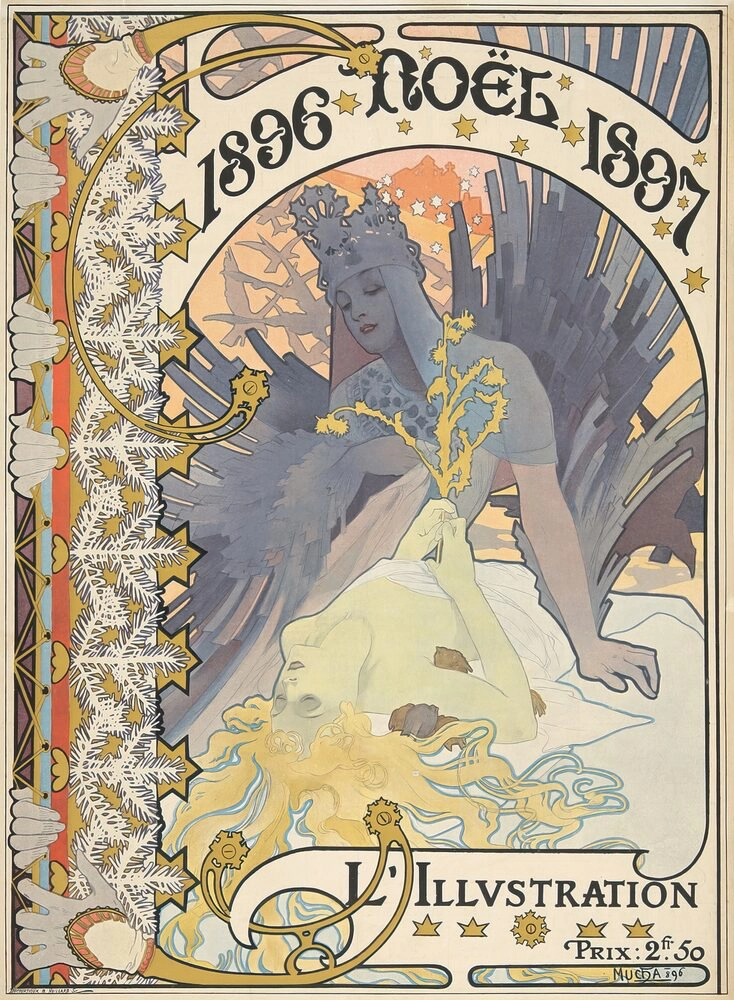
This elaborate Christmas illustration was made for the French magazine L'Illustration. Mucha combines symbolic figures, seasonal motifs and rich ornamental borders to celebrate the festive season. The detailed composition showcases his mastery of Art Nouveau decorative storytelling.
Monaco-Monte-Carlo, 1897
Commissioned by the Chemins de Fer P.L.M. railway company, this travel poster promotes the luxurious resort of Monaco-Monte-Carlo. Mucha depicts an elegant maiden surrounded by exotic flora, evoking the warmth and glamour of the Riviera. The flowing hair and botanical frame are signature elements of his Art Nouveau style.
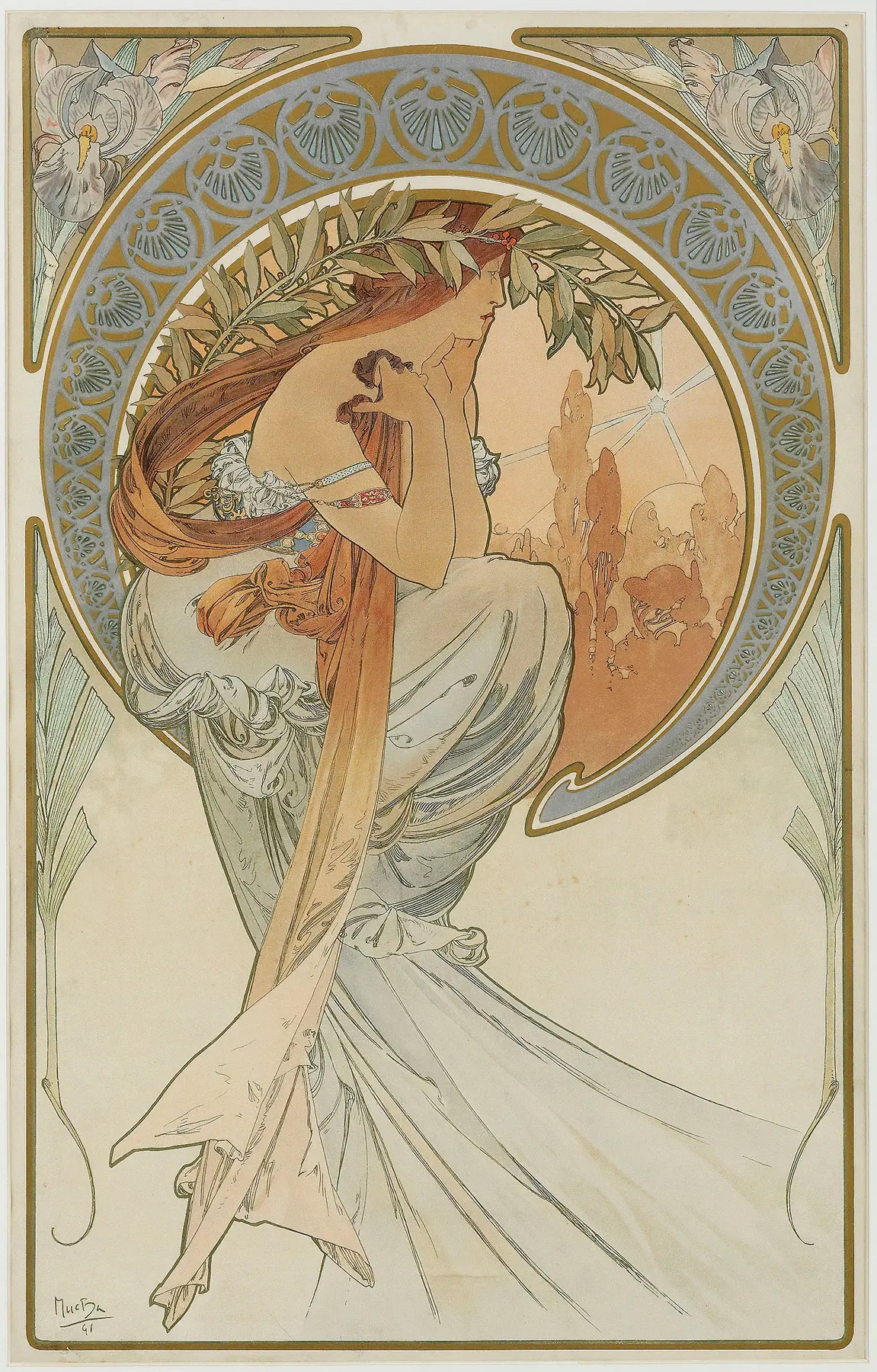
The Arts, 1898
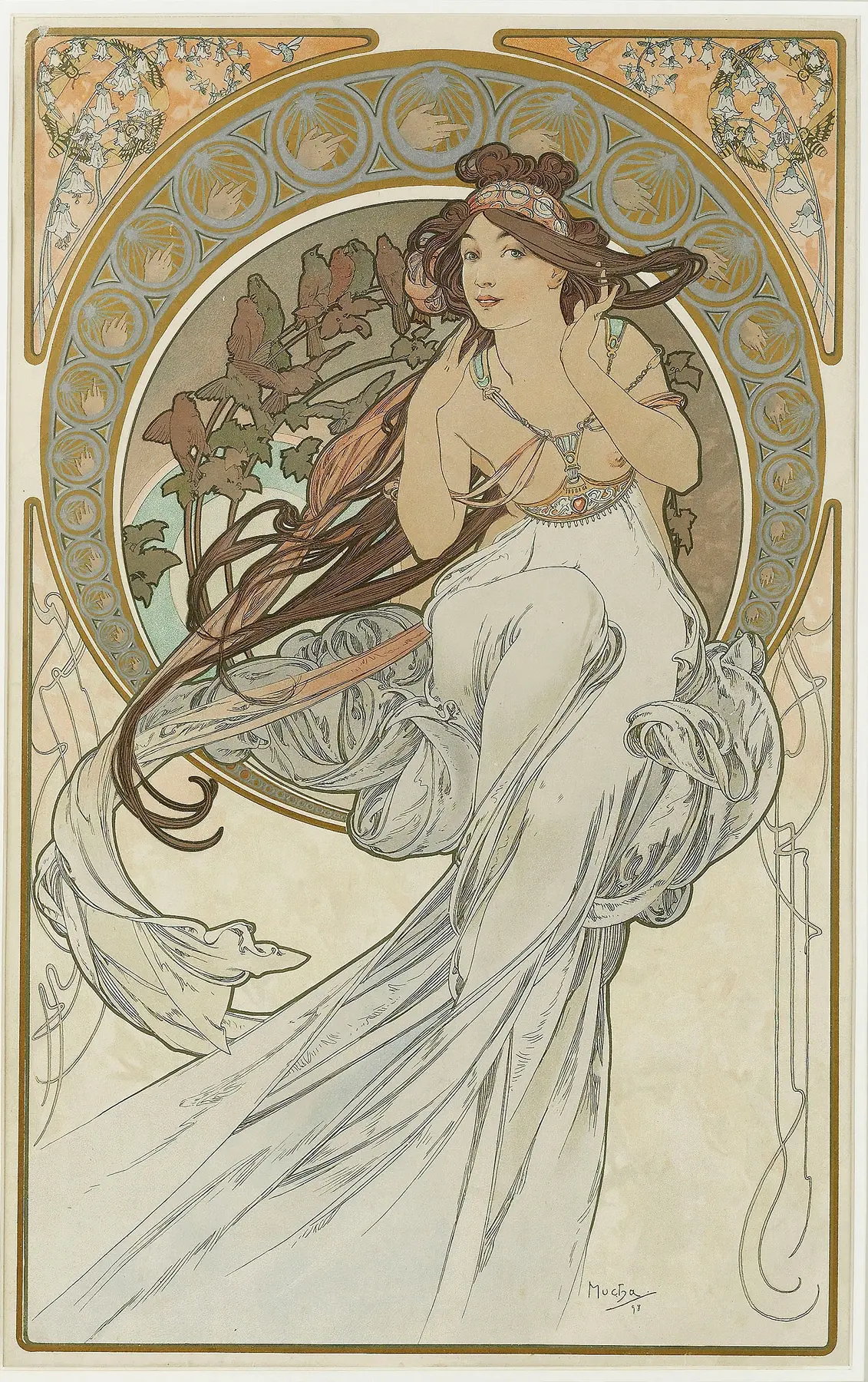
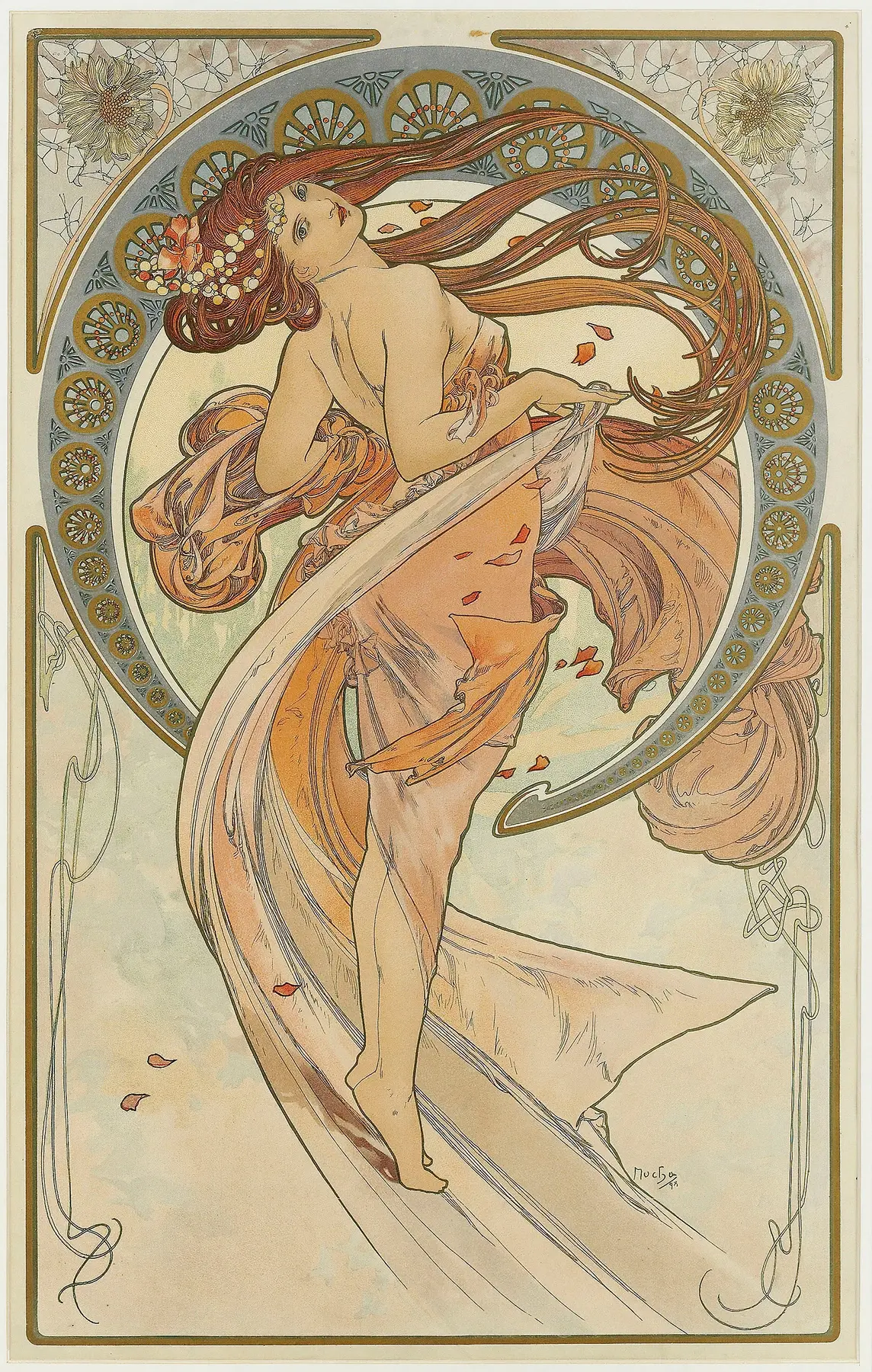
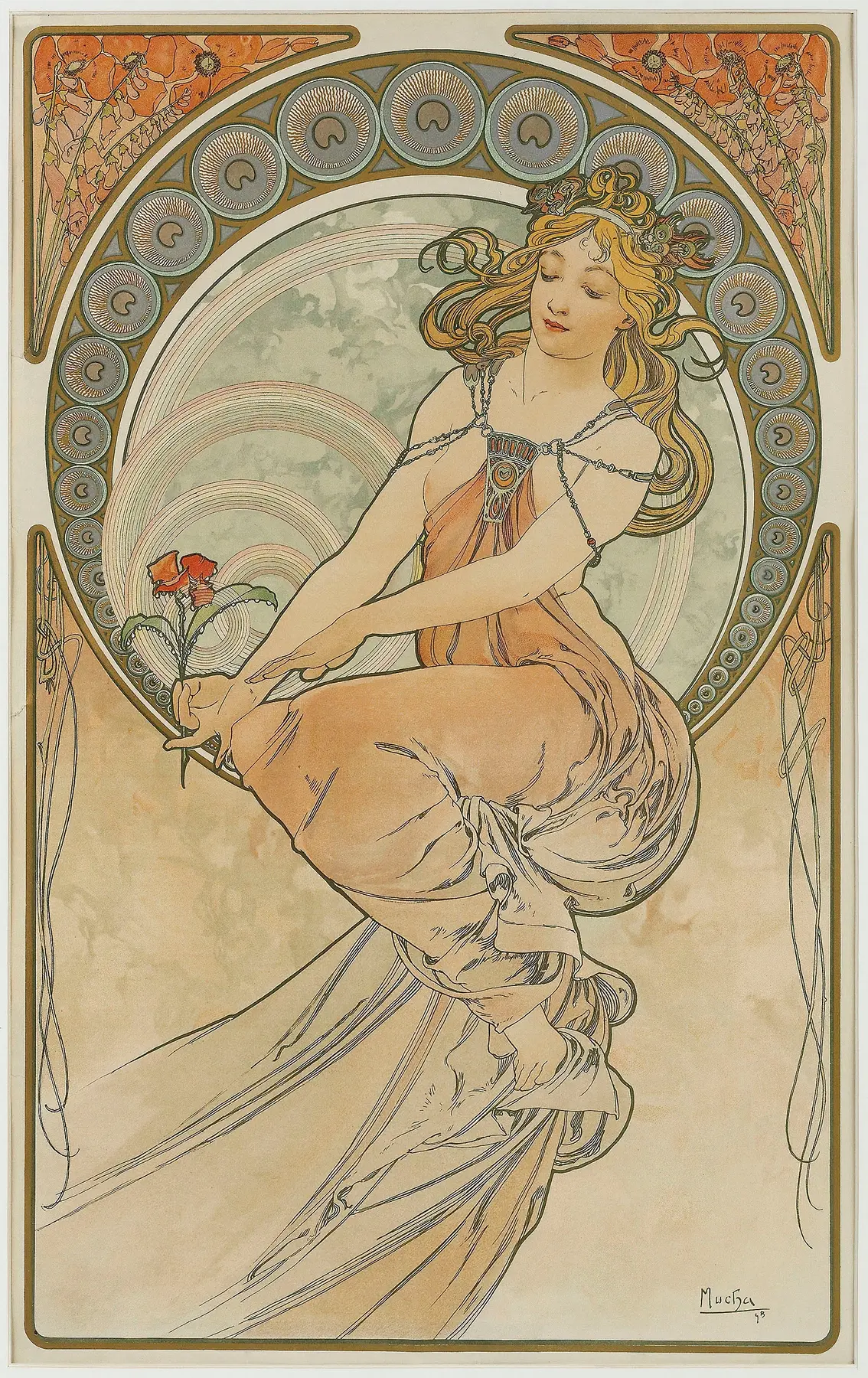
Alphonse Mucha defined the aesthetic of Art Nouveau. His art is characterised by flowing curves, botanical motifs, gentle female figures and soft muted colours. Mucha merged nature and ornament, turning illustration into a decorative art form.